
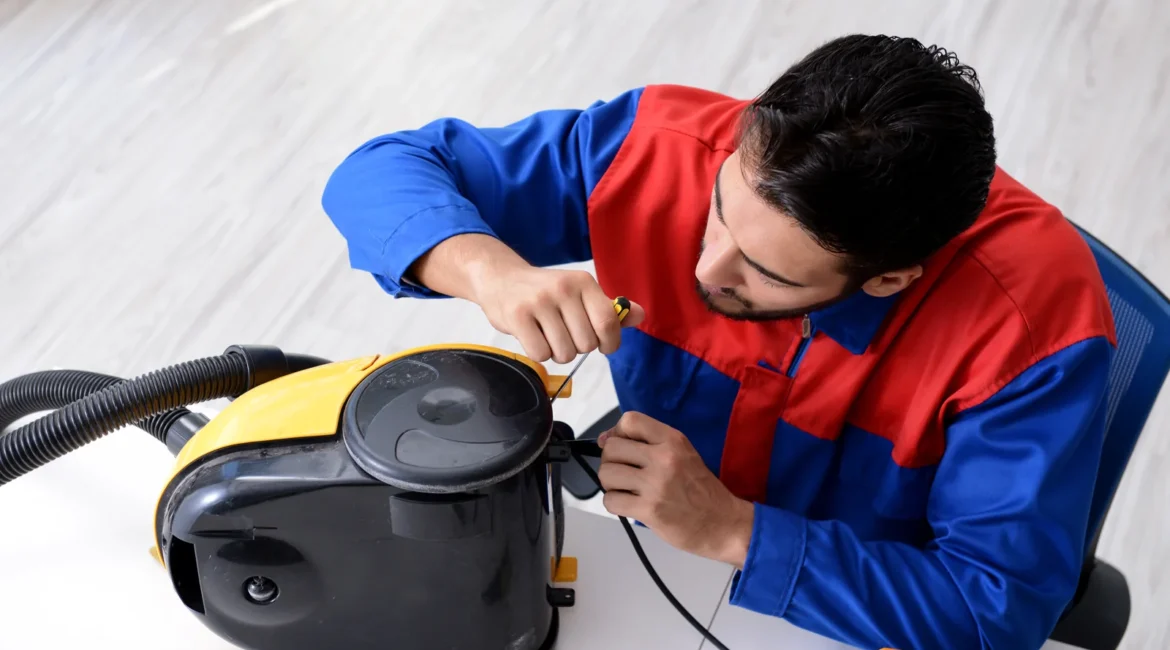
A vacuum that runs for ten minutes, then falls silent and feels warm, is one of our most common autumn calls. Wet leaves, dried mud and dog hair load up a cleaner fast at this time of year. Vacuum cleaner overheating is rarely random, because the machine is telling you something has choked its airflow or worn its motor. As part of our appliance repair in Ormskirk, we open up cleaners every week to find out which.
Vacuum Cleaner Overheating and What the Motor Is Protecting Itself From
Most people think the air a vacuum pulls in is only there to lift dirt. In fact, that same airflow passes through the motor on its way out and carries the heat away.
When the air stops moving freely, the motor keeps working but loses its cooling. The temperature then climbs within minutes. That is why vacuum cleaner overheating nearly always starts with a restriction rather than an electrical fault. Listen for the note rising to a strained whine just before the machine stops.
The Thermal Cut-Out and Why It Resets Itself
Inside most corded cleaners sits a thermal cut-out. This is a small heat-sensitive switch clipped to the motor housing. Once the motor passes a set temperature, the switch opens and the power stops. On many models it resets as the cleaner cools, so the machine seems to fix itself and then fails again tomorrow.
Cordless sticks from Dyson and Shark do the same job through their electronics, so they may pulse or flash a light instead. If you keep resetting it without clearing the cause, the motor windings cook a little more each time.
Choked Filters and Bags That Look Half Empty
The biggest cause we find is a clogged filter. Henry and Miele cylinders use the bag as the first filter. So a bag packed with fine dust acts like a closed door, even when it looks half empty. Plaster dust, fireplace ash and talc are the worst, because the fine particles seal the paper.
Bagless machines move the problem along. The pre-motor filter, the foam or felt pad that shields the motor, fills with grey dust and starves the airflow. We often pull filters from Vax and Shark uprights that have never had a rinse.
Leaves, Mud and Grit in the Hose After Autumn Walks
October brings its own kind of blockage. Damp leaves and dried mud from boots and paws gather in the hose bend and the neck of the floor head. One wet leaf can plaster itself across a hose and hold back everything behind it. Around Aughton and Formby, garages and utility rooms add gravel to the wand joint too.
A hidden blockage like this is a classic route to vacuum cleaner overheating. To check, unplug the cleaner and detach the hose at both ends. Then look through it towards a light. Our piece on vacuum cleaner hose blockage explains safe ways to clear it without splitting the hose.
Worn Motor Bearings and Carbon Brushes
If the airflow is clear and the cleaner still runs hot, the motor is the next suspect. Most mains motors have two carbon brushes. These small graphite blocks press against the spinning commutator to carry current into it. As they wear down they spark more, which adds heat and a sharp electrical smell.
The bearings, tiny ball races at each end of the shaft, also wear with age. Once their grease dries out they drag, and the motor draws more current for the same suction. You may hear a rough, grinding note at start-up. In that case vacuum cleaner overheating is a wear problem, not a blockage.
A Burning Smell Is a Signal to Stop
Not every smell means danger, since a dusty motor can smell warm at first. However, hot rubber usually points to a belt slipping on a jammed brush bar. An acrid, electrical smell suggests arcing brushes or overheated windings. We explain the different smells in why your vacuum cleaner smells when running.
If you see smoke or scorch marks around the vents, unplug the machine and stop using it. Damaged insulation can leave live parts exposed. Electrical Safety First has clear advice on plugs, leads and small appliances that run hot. Repeated vacuum cleaner overheating with a smell deserves that caution.
Henry, Vax, Miele and Shark Patterns We Often See
Henry and other Numatic cylinders are tough, but owners often run them long after the bag is full. The sack then folds over the motor intake. We cover that workhorse in Henry vacuum cleaner repairs. Older Vax uprights tend to run hot through a split hose or a brush bar packed with hair.
Miele cylinders have good motor protection, so they usually cut out cleanly. The cause is nearly always the bag or the motor filter behind it. Shark uprights often trip their protection when hair winds around the roller. With each brand, vacuum cleaner overheating follows a pattern we can usually spot quickly.
Safe Checks Before You Call an Engineer
Always switch off and unplug first. Then empty the bin or fit a fresh bag, and remove every filter you can reach. Turn the brush bar by hand to feel for drag. Also look along the mains lead for flattened or nicked sections, since a damaged cable warms up too.
Leave the cleaner for at least an hour, because the cut-out needs time to reset. If it then runs for a full clean, the restriction was probably the cause. If vacuum cleaner overheating returns within minutes, even with clean filters and a clear hose, the fault sits inside the machine.
What Our Engineer Tests on the Bench
During a vacuum cleaner repair, we measure rather than guess. With a multimeter we check continuity through the thermal cut-out and resistance across the motor windings. Then an insulation test between live parts and the casing confirms that no current leaks where it should not.
Those readings show whether the fault is a part we can replace or a tired motor. We provide vacuum cleaner repair Skelmersdale families use for busy household machines. Near the coast, vacuum cleaner repair Southport visits often turn up switches corroded by damp garages. We also offer vacuum cleaner repair Formby homes book for these faults.
Repair or Replace Your Overheating Cleaner
A good cylinder such as a Henry or a Miele is built for repair. New brushes, bearings or a cut-out are usually money well spent. Cheaper bagless uprights are a closer call, especially once the motor has failed. Even so, constant vacuum cleaner overheating on a budget machine can make replacement the sensible choice, and we will say so honestly.
Our call out fee is a low £30, and we refund it against parts or a replacement appliance, which makes it great value. If our engineer can fix your cleaner on the spot, you pay a fixed £60 labour plus the cost of parts. New parts also carry a 12 months warranty.
If your vacuum keeps cutting out hot, stop resetting it and let us find the cause. Call us on 01695 768 738 to book an engineer.

