
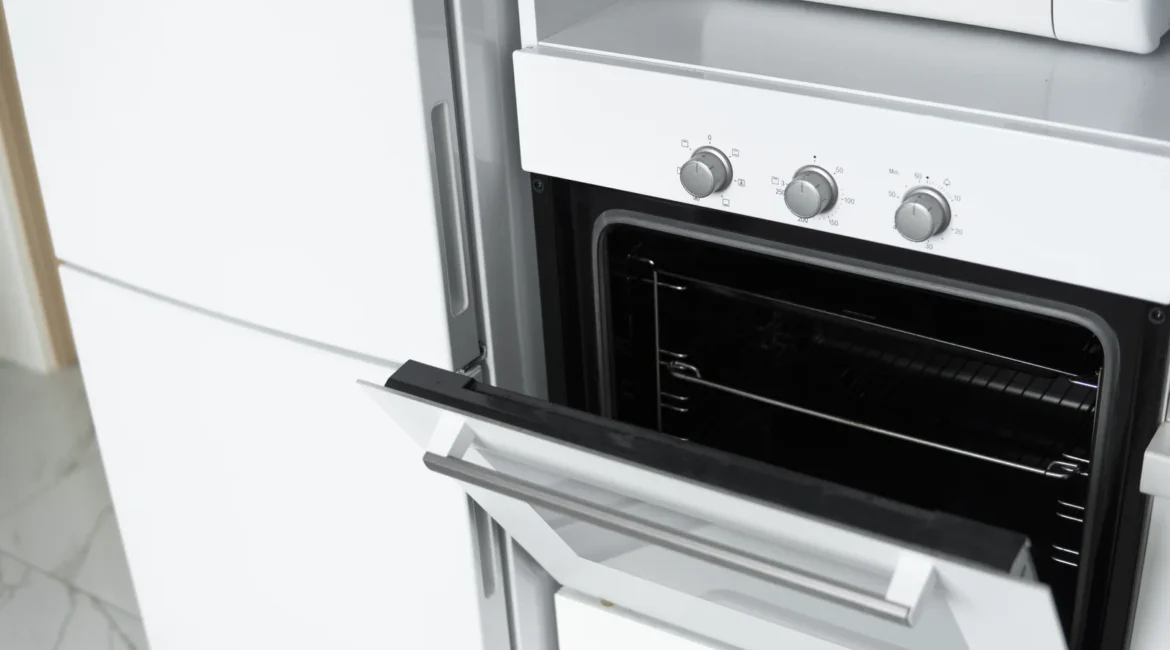
A failed bottom oven element rarely announces itself. The oven still heats, the fan still turns, and the light still comes on. Then the autumn crumble comes out with a pale, soggy base and a dark top, and you start to wonder. Our engineers provide appliance repair in Ormskirk and across Merseyside. Base element faults become a regular job once the evenings draw in. Here is what the part does and how to tell when it has gone.
What the Bottom Oven Element Actually Does
The bottom oven element, often called the base element, is a heating coil that sits under the oven floor. On most modern ovens you cannot see it, because a steel floor panel or the enamel liner covers it. It heats the floor, and the floor heats the base of whatever sits on the lowest shelf. In a conventional oven, it works alongside the top element to create gentle, even heat from above and below.
A multifunction oven uses it in more ways. Bottom heat on its own suits pastry bases and slow dishes. Many pizza settings pair the base element with the fan, and some conventional settings use top and bottom together. However, the plain fan setting usually relies on the round element behind the back panel instead. That is why a bottom oven element can fail without anyone noticing for weeks.
Soggy Bottoms and Top-Only Browning
The classic sign is food that browns on top but stays pale underneath. Quiches stay wet in the middle, pies lose their crisp base and bread sounds dull when you tap it. On conventional settings, preheating also takes longer, because the top element has to do all the work alone. If you mostly bake on the fan setting, you may only spot the fault when you switch to a recipe that needs bottom heat.
Some owners notice the opposite. A partly failed element can create a hot spot, which scorches one corner of a tray while the rest stays pale. Either way, the pattern points to the bottom oven element or its supply, rather than the fan.
A Simple Test You Can Do Safely
Choose the bottom heat symbol on your selector, or the conventional setting if your oven has no separate base option. Set a moderate temperature and close the door for ten minutes. Then open the door and hold your hand a little above the oven floor, without touching it. A working element makes the floor noticeably warmer than the air near the roof.
If the floor stays cool, switch the oven off at the isolator switch above the worktop before doing anything else. Do not remove the floor panel or the back of the oven, because the terminals carry mains voltage. Electrical Safety First explains why fixed wiring like this needs a competent person. If other settings also misbehave, our guide why your electric oven is not heating up correctly covers the wider picture.
Why the Bottom Oven Element Fails
A heating element is a coiled wire packed in mineral powder inside a metal sheath. Every time it heats and cools, the metal expands and shrinks. Over hundreds of cycles, the wire thins at one point until it breaks, and the circuit goes open. Spills make things worse. When fat or fruit juice runs through gaps at the floor edge, it bakes onto the sheath and creates hot spots.
On ovens where the element shows, you may see blistering, splitting or a bulge in the sheath. A bottom oven element that has split can also let moisture reach the powder inside. Current then leaks to the metal case, and the oven trips the electrics the moment you select bottom heat. Our engineer treats that as a safety fault and isolates the oven straight away.
When the Element Is Fine but the Heat Is Not
A cold oven floor does not always mean a dead element. The selector switch, the rotary control that chooses the heating mode, can burn its contacts on the base heat position. A thermostat drifting out of calibration gives similar symptoms, and electric cooker thermostat faults explains that side. A tripped thermal cut-out, a safety switch that breaks the circuit if the oven overheats, can also stop the element.
Our engineer therefore tests before ordering anything. We measure the bottom oven element for resistance and continuity with a multimeter, then run an insulation test between the terminals and the case. After that we check the supply from the selector and thermostat with the oven running. That order stops you paying for a part you did not need.
Replacing a Bottom Oven Element
On many built-in Bosch, Neff, Siemens and AEG ovens, we reach the element from the back. That means sliding the oven out of its housing, which needs care with older kitchens in Bootle and Litherland where units have settled. On other models we lift the floor panel from inside. Either way, a replacement bottom oven element usually takes well under an hour once we have access.
We fit a genuine or matched part with the correct wattage, because a mismatched element upsets the thermostat. Then we run the oven on each setting to check the heat and test the insulation again. Our electric oven repair visits finish with a full check, not just the new part.
Repair or Replace the Oven
A base element is one of the more affordable oven repairs, so replacing it nearly always beats buying a new oven. We carry out electric oven repair Kirkby households call on before the Christmas cooking rush. Our team also covers electric oven repair Bootle homes, and we handle electric oven repair Litherland customers book through the darker months.
Our call out fee is a low £30. We refund it against the cost of parts or a replacement domestic appliance, so you get great value for money. If our engineer can fix your oven on the spot, we charge a fixed £60 labour plus the cost of parts. New parts also carry a 12 months warranty.
If your baking browns on top and stays pale beneath, a tired bottom oven element is the likely cause. Call us on 01695 768 738 and we will test it and get your oven cooking evenly again.

